

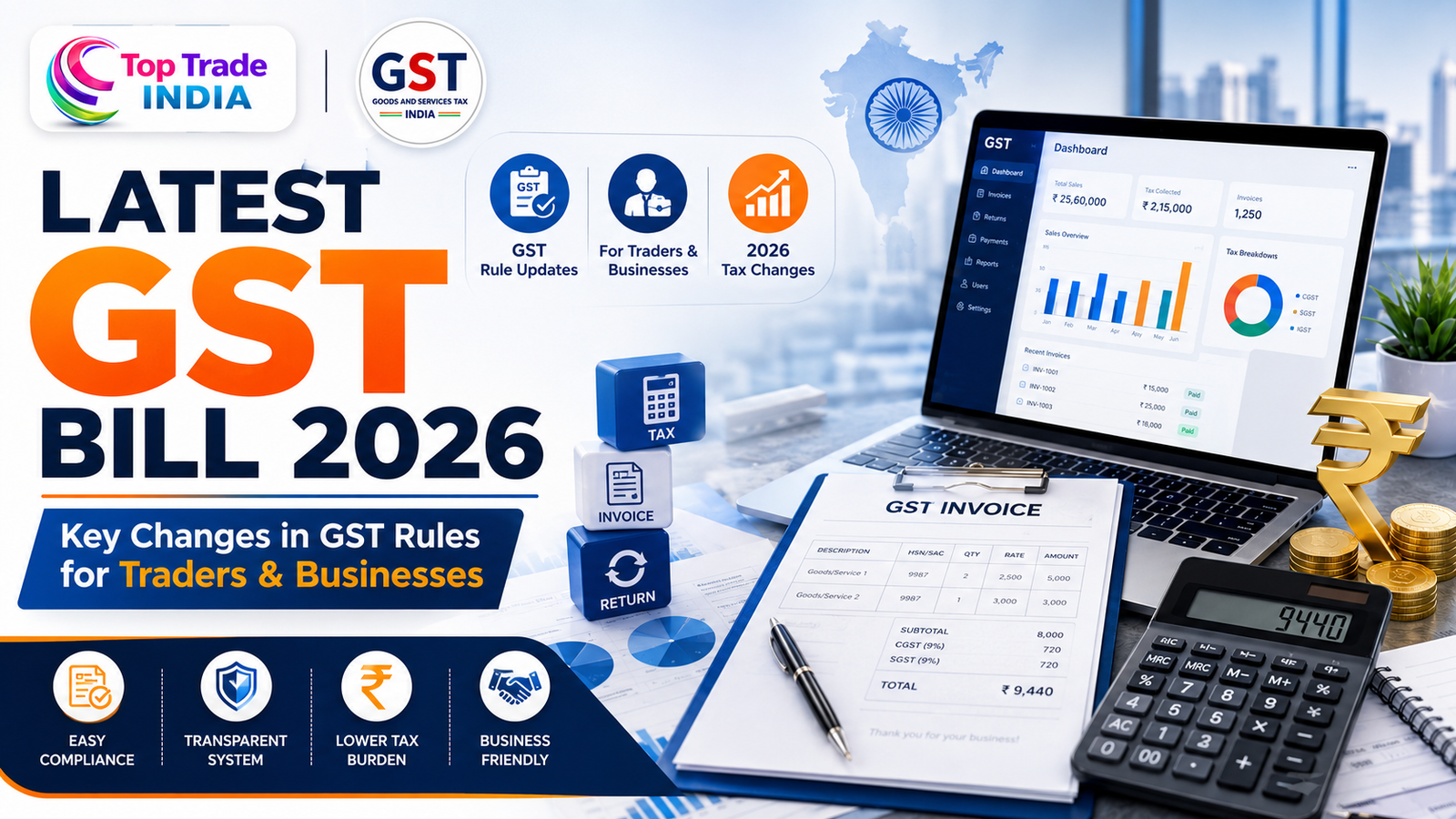
Latest GST Bill 2026: Key Changes in GST Rules for Traders and Businesses
If you run a business in India, chances are your accountant has already messaged you about the Latest GST Bill 2026. And honestly, it's worth paying attention to this one. Every few years, the GST framework gets a shake-up, and 2026 is shaping up to be one of those years where the rules genuinely change how traders, retailers, and MSMEs handle their day-to-day compliance.
Let's break down what's actually changing, why it matters, and what you need to do about it before the new rules catch you off guard.
Why This GST Update Matters
The government's core goal with this round of amendments is simple: reduce compliance stress for genuine businesses while tightening the net around fake invoicing and fraudulent input tax credit claims. So if you're a legitimate trader filing your returns on time, a lot of these changes should actually make your life easier. If you've been cutting corners, though, this is the year the system catches up.
Key Changes in GST Rules for Traders
1. Simplified Return Filing Process
One of the most talked-about updates is the push toward a more streamlined return filing structure. Fewer forms, pre-filled data pulled directly from e-invoices, and reduced manual entry are all part of the plan. For small and medium traders who've struggled with monthly filing deadlines, this is a welcome relief.
2. Revised E-Invoicing Threshold
The e-invoicing mandate, which earlier applied mainly to larger businesses, continues to widen its scope. More traders with moderate turnover are now expected to generate e-invoices for B2B transactions. If you haven't set up e-invoicing software yet, now's the time — non-compliance here can lead to blocked input tax credit and penalties.
3. Stricter Input Tax Credit (ITC) Rules
ITC has always been a grey area for many businesses, and the new GST rules tighten this further. Credit will only be available when supplier compliance is verified through the system, meaning your ITC claims are now more closely tied to whether your vendors are filing their returns correctly. This makes vendor due diligence more important than ever.
4. Composition Scheme Adjustments
Small traders under the composition scheme will see updated turnover limits and slightly revised tax rates. This is aimed at bringing more small businesses under a lighter compliance burden without pushing them into the regular GST framework prematurely.
5. AI-Based Scrutiny and Fraud Detection
Tax authorities are increasingly relying on data analytics and AI-driven tools to flag mismatches between GSTR filings, e-way bills, and bank transactions. This means discrepancies that might have gone unnoticed earlier are far more likely to trigger a notice now. Clean bookkeeping isn't optional anymore — it's your first line of defence.
6. Relief Measures for MSMEs
On a positive note, several relief measures have been introduced specifically for MSMEs, including relaxed late fee structures and extended timelines for certain filings during the transition period. The intent seems to be easing businesses into the new system rather than penalizing them outright.
What Traders and Businesses Should Do Now
- Upgrade your invoicing system if you haven't already moved to e-invoicing.
- Review vendor compliance regularly, since your ITC now depends on it.
- Reconcile your books monthly instead of waiting till year-end.
- Consult your tax advisor about how the composition scheme changes might affect your eligibility.
- Keep digital records organised, since AI-based scrutiny leaves little room for informal bookkeeping.
Final Thoughts
The Latest GST Bill 2026 isn't just another round of paperwork changes — it reflects a broader shift toward a more transparent, tech-driven tax ecosystem in India. For traders and businesses willing to adapt early, these changes can actually reduce long-term compliance headaches. The businesses that wait until the deadline, on the other hand, are likely to find themselves scrambling.
Staying updated with GST rules isn't just about avoiding penalties anymore — it's becoming a genuine competitive advantage. So take some time this month to review your compliance checklist, talk to your CA, and make sure your business is ready for what's next.
Note: GST rules and provisions are subject to periodic amendments by the government. Traders and businesses are advised to verify the latest updates through official GST portal notifications or consult a tax professional before making compliance decisions.
Suggested External Backlinks
Top Trade India Business Profile
? Website: https://toptradeindia.com
? Call: 011-41043388
? Follow us on: Top Trade India
Comments (0)
No comments yet. Be the first to comment!
Leave a Comment