

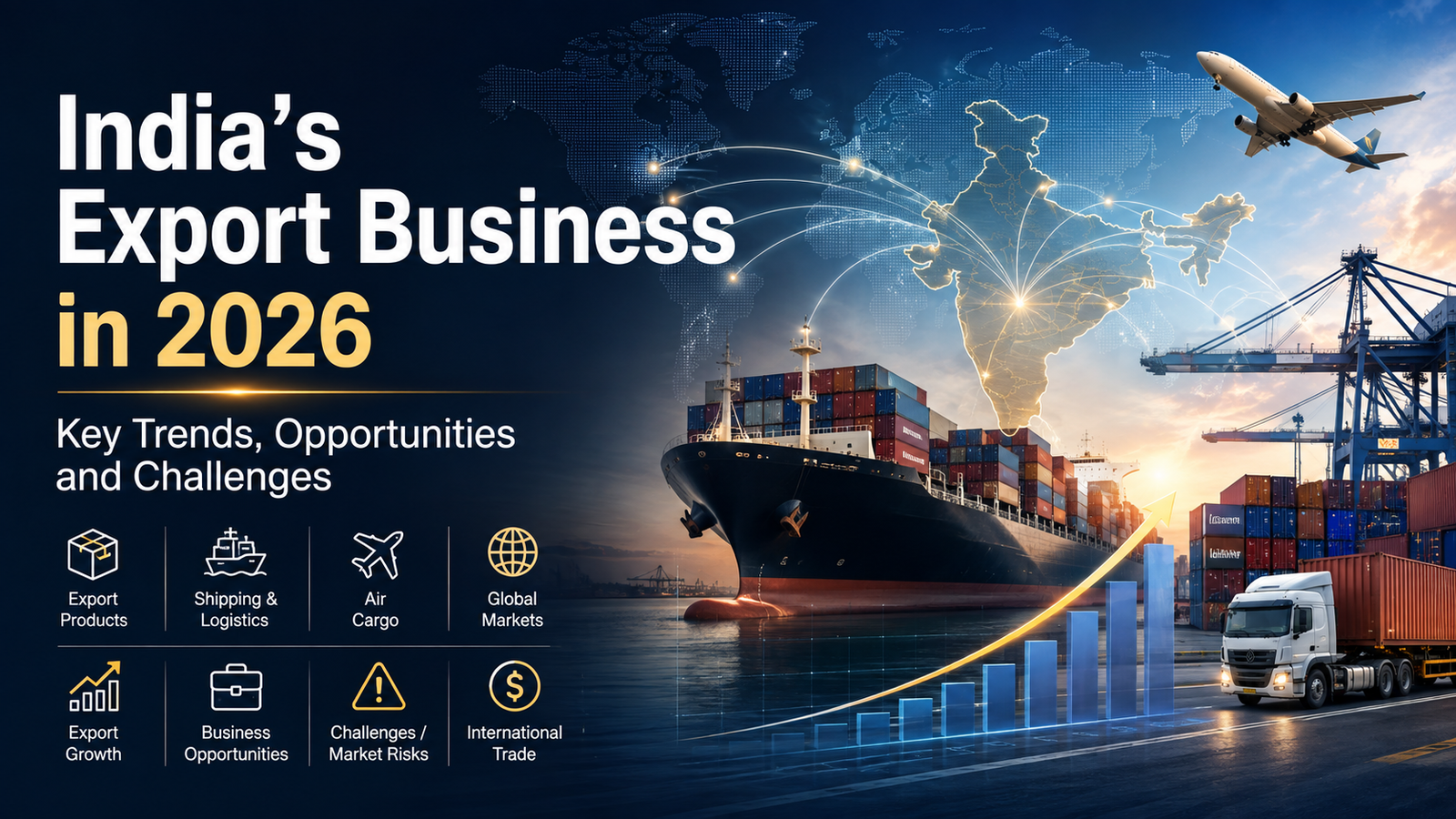
India’s Export Business in 2026: Key Trends, Opportunities and Challenges
India’s export business is entering an important phase in 2026. With growing global demand, improving digital infrastructure, and increasing interest in Indian products, exporters have more opportunities to reach international buyers. At the same time, changing trade policies, logistics costs, currency movements, and global competition continue to create challenges.
For manufacturers, suppliers, and new entrepreneurs, understanding these trends can help build a stronger and more sustainable export business.
Key Trends Shaping India’s Export Business in 2026
One of the biggest changes is the growing use of digital B2B marketplaces. Indian suppliers can now connect with overseas buyers without depending entirely on traditional trade networks. Online product catalogues, digital payments, virtual meetings, and direct communication are making international trade more accessible to small and medium-sized businesses.
Another important trend is the rising demand for Indian products in global markets. Sectors such as textiles, engineering goods, pharmaceuticals, food products, handicrafts, chemicals, electronics, and agricultural products continue to attract international buyers.
Sustainable production is also becoming increasingly important. Many global buyers are looking for suppliers that follow environmentally responsible manufacturing practices, use sustainable materials, and maintain transparent supply chains.
Growing Opportunities for Indian Exporters
The expansion of B2B export business in India is creating opportunities for both established companies and new exporters. Businesses can explore international markets by identifying products with consistent demand and researching buyer requirements before entering a new country.
E-commerce and online business directories have also made it easier to find international buyers for Indian products. A strong online presence, professional product listings, clear pricing information, and quick communication can improve the chances of receiving genuine enquiries.
Indian manufacturers can also benefit from exploring niche markets instead of competing only on price. Products with reliable quality, customization options, attractive packaging, and consistent supply can help suppliers build long-term relationships with overseas buyers.
Challenges Exporters Need to Prepare For
Despite the opportunities, export business in India comes with several challenges. International shipping costs can affect profit margins, while customs procedures and documentation require careful attention.
Exporters also need to understand the regulations of their target country. Product standards, certifications, packaging requirements, import duties, and labelling rules can vary significantly between markets.
Currency fluctuations are another concern. Changes in exchange rates can influence the final value of an export order and make financial planning more difficult.
For new businesses, finding trustworthy buyers is equally important. Proper buyer verification, clear payment terms, secure transactions, and well-defined contracts can reduce the risk of disputes.
How Businesses Can Prepare for 2026
Success in the Indian export market will depend on preparation rather than simply finding overseas customers. Businesses should research target markets, understand buyer preferences, maintain consistent product quality, and keep export documentation organised.
Building a strong digital presence can also help suppliers become more visible to international buyers. Professional product descriptions, high-quality images, accurate specifications, and fast responses can make a significant difference when competing in global markets.
Final Thoughts
India’s export sector offers considerable potential in 2026, particularly for businesses that combine quality products with digital marketing and efficient international trade practices. From Indian manufacturers and exporters to small suppliers entering global markets for the first time, the opportunities are expanding.
However, sustainable export growth requires proper market research, compliance, reliable logistics, and careful buyer selection. Businesses that adapt to changing global demand and use modern B2B tools effectively will be better positioned to grow their international trade presence in the years ahead.
suggestion link
Call: +91 88264 00869
Website: Top Trade India
Email: info@toptradeindia.com
Follow us on: Instagram , Facebook , YouTube


Comments (0)
No comments yet. Be the first to comment!
Leave a Comment