

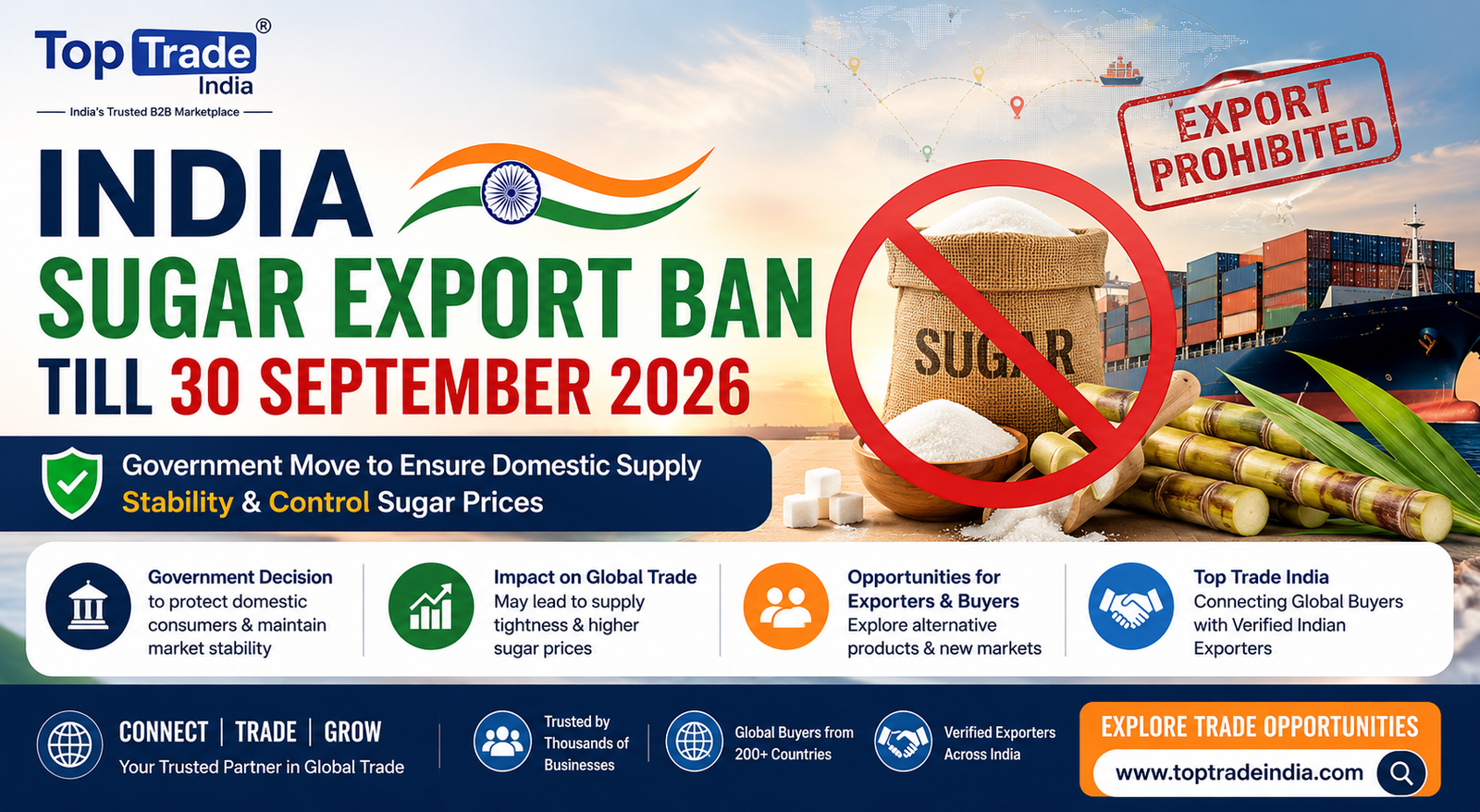
The Indian government has officially extended restrictions on sugar exports till September 2026 in order to maintain domestic supply stability and control rising food prices. This move is expected to significantly impact global sugar trade, exporters, importers, food manufacturers, and international buyers who depend on India for bulk sugar supplies.
As one of the world’s leading sugar producers and exporters, India plays a major role in the international sugar market. Any policy change from India immediately affects global pricing, availability, and trade flows.
At Top Trade India, we closely monitor international trade policies and help exporters, importers, manufacturers, and global buyers stay updated with the latest developments affecting global commerce.
Why Has India Banned Sugar Exports?
The Indian government introduced the export restriction mainly due to:
- Concerns over lower sugar production
- Rising domestic sugar prices
- Increasing demand for ethanol production
- Need to maintain sufficient stock for domestic consumption
- Climate-related agricultural uncertainties
India has been balancing sugar availability between:
- Domestic food consumption
- Ethanol blending programs
- Export commitments
Due to reduced surplus availability, authorities decided to restrict exports to stabilize the local market.
Impact on Global Sugar Trade
India’s export restrictions are expected to create major shifts in the global sugar industry.
1. Rise in International Sugar Prices
Countries dependent on Indian sugar exports may face increased procurement costs due to limited supply in the global market.
2. Supply Chain Disruptions
Importers across:
- Middle East
- Africa
- Southeast Asia
- Europe
may need to identify alternative sourcing destinations.
3. Increased Demand for Alternative Suppliers
Countries like:
- Brazil
- Thailand
- Australia
could witness increased global demand for sugar exports.
What This Means for Indian Exporters
Indian sugar exporters may temporarily face:
- Reduced export opportunities
- Shipment delays
- Contract renegotiations
- Market uncertainty
However, this also opens opportunities to diversify into:
- Processed food exports
- Agro commodities
- Spices
- Pulses
- Rice
- Oilseeds
- Value-added agricultural products
Businesses involved in international trade should stay updated with changing DGFT notifications and government export regulations.
Opportunities for Global Buyers
Although sugar exports are restricted, global buyers can still explore sourcing opportunities in other Indian agricultural sectors such as:
- Rice
- Wheat products
- Pulses
- Spices
- Fresh vegetables
- Dehydrated products
- Oil seeds
- Animal feed products
- Processed foods
At Top Trade India B2B Marketplace, international buyers can connect directly with verified Indian exporters, manufacturers, suppliers, and wholesalers across multiple industries.
How Top Trade India Supports Exporters & Importers
Top Trade India helps businesses grow globally through:
- International B2B networking
- Export promotion solutions
- Buyer-seller connections
- Trade inquiry generation
- Global business visibility
- Digital export marketing
- Product listing services
- Trade lead generation
Whether you are an exporter searching for international buyers or an importer looking for reliable Indian suppliers, our platform helps simplify global trade connections.
Key Agricultural Products in Demand Globally
Despite sugar export restrictions, demand remains strong for:
- Green Cardamom
- Red Chilli
- Turmeric
- Rice
- Onion
- Garlic
- Cumin Seeds
- Fresh Fruits
- Poultry Products
- Dairy Products
- Frozen Foods
Explore verified exporters and suppliers on:
Future Outlook for the Sugar Industry
Industry experts believe export policies may continue depending on:
- Monsoon performance
- Sugarcane production levels
- Domestic consumption trends
- Ethanol demand growth
Exporters and importers should regularly monitor official government notifications and maintain flexible sourcing strategies.
Conclusion
India’s sugar export ban is a major development for the global agricultural trade sector. While it may create temporary supply challenges in international markets, it also encourages businesses to diversify sourcing and explore new trade opportunities.
Companies involved in global import-export activities should remain proactive, informed, and connected with reliable trade platforms.
For international trade opportunities, verified suppliers, and export business growth, visit:

Comments (0)
No comments yet. Be the first to comment!
Leave a Comment