

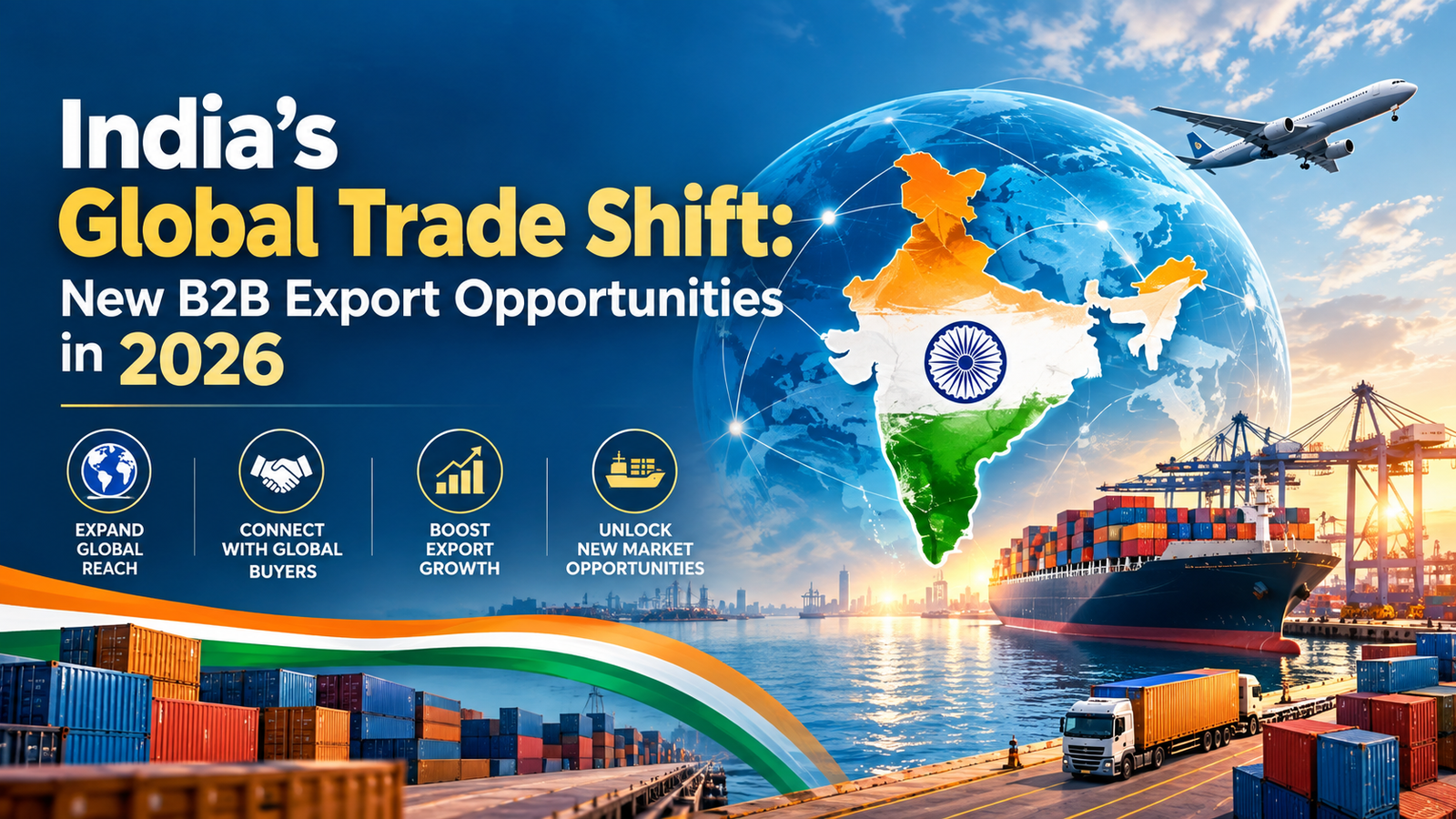
India’s role in global trade is shifting pretty fast. With more worldwide demand for Indian goods, better logistics, digital business platforms, and deeper trade connections, Indian companies are finding all kinds of ways to tap buyers across the globe. For manufacturers, suppliers, and exporters, 2026 also brings a few fresh openings, to make a stronger mark in international markets, more or less.
And honestly the rise of digital commerce, has made it easier for businesses to spot overseas buyers, check what the market actually wants, and then build longer-term B2B ties. That’s why B2B export opportunities in India are growing not only in the usual product lines, but also in newer and emerging categories, as well.
India’s Growing Position in Global Trade
The India global trade 2026 picture is being shaped by buyer priorities that keep changing, plus the growing preference for products sourced from dependable suppliers. Indian businesses already have real strengths in textiles, agricultural items, spices, pharmaceuticals, engineering goods, handicrafts, processed foods, chemicals, and machinery.
Right now international buyers are more focused on consistency. They want suppliers that can keep quality steady, offer pricing that feels fair, and deliver on time. When Indian manufacturers and exporters can match those expectations, new doors open up, and faster than before.
Emerging B2B Export Opportunities in India
One of the biggest chances in 2026 is the expansion of the B2B export business in India. Companies can test international demand for well-known products, plus some specialized goods too.
Agricultural products, food ingredients, spices, grains, processed foods, natural products, textiles, packaging materials, and engineering components continue to look promising for international trade. Meanwhile, firms working on sustainable products and value-added manufacturing can target new customer groups, quite quickly.
For small and medium-sized businesses, entering foreign markets can feel tough, like “why bother”. But digital B2B platforms, online product catalogs, buyer requests, and international outreach have made the path more reachable than it used to be.
Exploring India Export Opportunities in 2026
The India export opportunities 2026 idea is not limited to one single region. Indian suppliers can look toward the Middle East, Europe, North America, Africa, and Southeast Asia, without locking themselves into one option.
Before jumping into a new market, exporters should really check product demand, import rules, pricing structures, certifications needed, packaging expectations, and shipping costs. Getting clarity on these, helps companies find the right buyers and reduces avoidable trouble later.
Also, building a proper online footprint matters, a lot. Many overseas buyers search suppliers online first. If the product catalog looks clear, the company details are accurate, certifications are present, and communication is fast, credibility improves, and trust follows.
Growing B2B Export Market in India
The B2B export market in India is becoming more and more digital. Instead of depending only on older trade connections, businesses can now show items through online channels and directly meet potential buyers.
For Indian exporters and suppliers, this means they can reach customers outside their local area. A supplier from a smaller town in India might connect with a buyer in another country, without leaning fully on physical trade fairs or visits.
Still, exporting is not only about finding a buyer. Companies need correct documentation, strict quality control, pricing that’s transparent, packaging that actually fits the product, and logistics that don’t fall apart. When those parts are handled early, exporters become more ready for long-term business, and repeated orders.
Preparing for the Next Phase of Indian Exports
India’s changing role in global trade creates a real, almost energizing environment for firms prepared to expand overseas. From agricultural commodities to manufactured goods, the possible export categories keep widening, and that’s the point.
Businesses that understand international demand, improve their digital visibility, and build consistent supply strength can explore what’s opening up in 2026. For manufacturers and suppliers, the next phase may be to choose the right markets, connect with verified buyers, and turn each individual inquiry into lasting B2B relationships, rather than one-time transactions.
The world market is more connected now, and Indian businesses are positioned well to join that change. With the right preparation, plus a focused export strategy, 2026 can open new routes for companies trying to go beyond domestic boundaries.
suggestion link
Call: +91 88264 00869
Website: Top Trade India
Email: info@toptradeindia.com
Follow us on: Instagram , Facebook , YouTube


Comments (0)
No comments yet. Be the first to comment!
Leave a Comment