

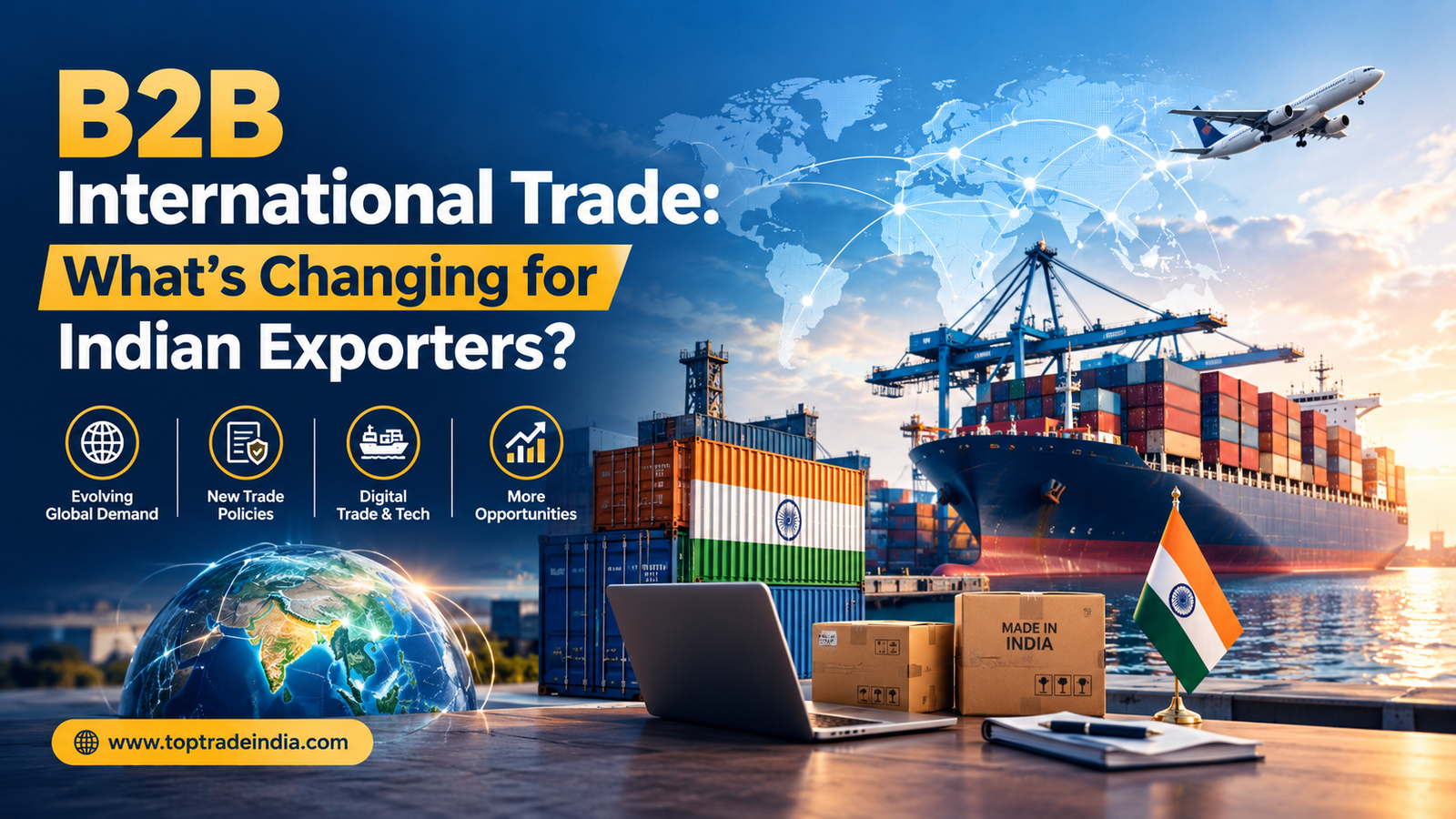
International trade is changing faster than ever. For Indian exporters, selling products to overseas buyers is no longer only about offering a competitive price. Buyers now expect better quality, faster communication, reliable delivery, digital documentation, and greater transparency.
With the growth of B2B international trade, Indian manufacturers, suppliers, and exporters have new opportunities to reach global markets. At the same time, they need to adapt to changing buyer expectations and international trade practices.
So, what exactly is changing for Indian exporters?
1. Digital B2B Trade Is Becoming the New Normal
Traditional methods of finding international buyers are gradually being replaced by digital channels. Global buyers increasingly search online for manufacturers, suppliers, wholesalers, and exporters.
This makes having a strong digital presence extremely important. Indian businesses can use B2B marketplaces, business directories, company websites, social media, and digital marketing to showcase their products to international buyers.
A professional online presence can help an Indian exporter build credibility even before the first conversation with a potential buyer.
2. Buyers Want More Than Competitive Pricing
Price is still important, but it is no longer the only deciding factor. International buyers are paying greater attention to product quality, certifications, packaging, delivery timelines, payment terms, and after-sales communication.
For Indian suppliers, this means product information needs to be clear and accurate. Detailed specifications, minimum order quantities, certifications, packaging details, and shipping information can make the buying process easier.
3. Technology Is Simplifying International Trade
Technology is making several parts of the export process easier. From finding buyers to managing enquiries and sharing documentation, digital tools can reduce manual work.
Exporters are also using online communication, digital invoices, automated follow-ups, online payment systems, and data analytics to manage international customers more efficiently.
For small and medium businesses, this creates an opportunity to compete in global markets without needing a huge international sales team.
4. Indian Exporters Are Exploring New Markets
Another major change is the growing interest in market diversification. Instead of depending heavily on one country or region, businesses are exploring multiple international markets.
Indian exporters of agricultural products, spices, textiles, handicrafts, engineering goods, food products, chemicals, and other manufactured products can explore opportunities across Asia, the Middle East, Africa, Europe, and other regions.
Market diversification can help businesses reduce dependency on a single market and identify new sources of international demand.
5. Compliance and Documentation Matter More
International buyers want confidence that a supplier can meet regulatory and documentation requirements. Exporters may need to manage documents related to invoices, shipping, product standards, certificates, customs, and payments.
Understanding export documentation, international shipping regulations, customs procedures, and trade compliance is therefore essential for businesses entering global markets.
Even a good product can face delays if documentation is incomplete or incorrect.
6. Building Trust Is Becoming a Competitive Advantage
In B2B international trade, buyers often deal with suppliers they have never met personally. Trust therefore plays a major role.
Professional communication, transparent pricing, consistent product quality, timely responses, secure payment processes, and reliable delivery can help Indian exporters build long-term relationships.
The Future of B2B International Trade
The future of B2B international trade in India is increasingly digital, competitive, and buyer-focused. Exporters who combine quality products with strong online visibility, efficient communication, proper compliance, and reliable service can create better opportunities in global markets.
For Indian manufacturers and suppliers, the message is simple: global buyers are easier to reach than before, but winning their trust requires more than simply listing a product. Businesses that adapt to changing international trade trends today will be better positioned to grow their export business tomorrow.
suggestion link
Call: +91 88264 00869
Website: Top Trade India
Email: info@toptradeindia.com
Follow us on: Instagram , Facebook , YouTube
Comments (0)
No comments yet. Be the first to comment!
Leave a Comment